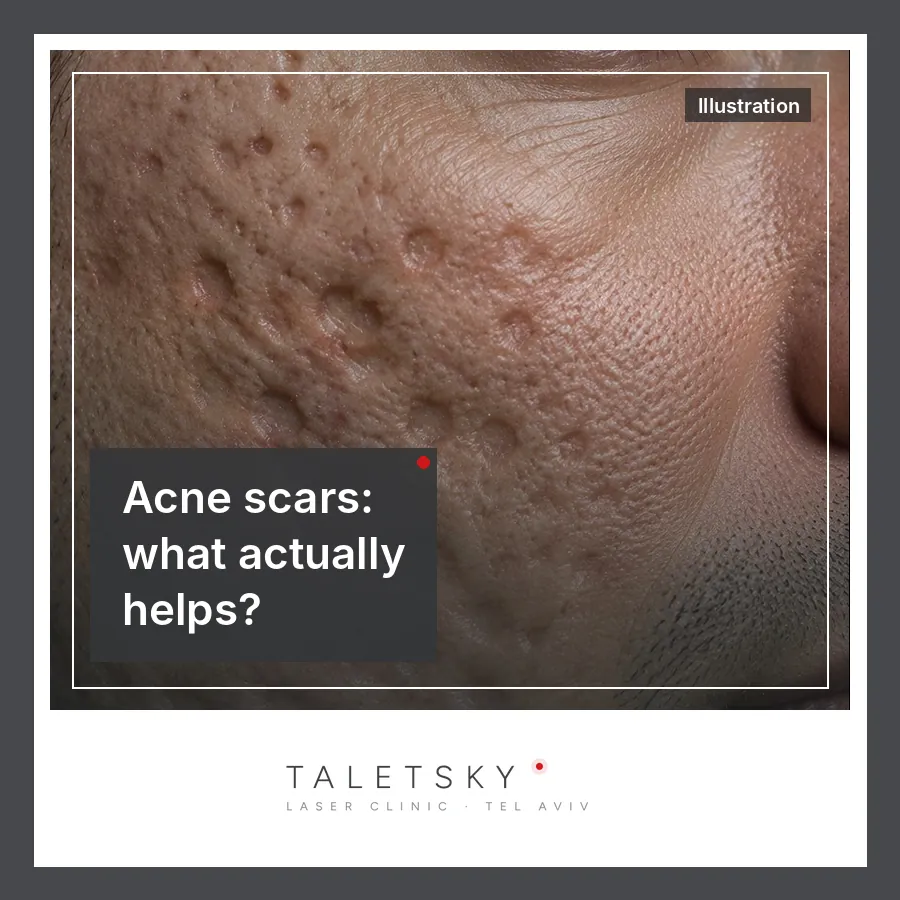
Acne scars:why they don’t fade on their own and what actually helps
- An acne scar is a change in the structure of the skin, not just its colour. That is why a cream can’t fill it.
- There are three main types: ice pick, boxcar and rolling. Each needs a different approach.
- What works is controlled stimulation of new collagen deep in the skin. A visible result usually comes after 3 to 4 sessions.
- For deep rolling scars nobody can honestly promise perfectly smooth skin. What can be achieved is clarified at the diagnosis.
Why acne scars don’t fade on their own
A normal pimple comes and goes. But when the inflammation is deep, it damages the layer under the surface, the dermis. That is where the collagen fibres that keep skin full and even live.
When the skin repairs itself after that kind of inflammation, it makes less collagen than before, and in a disorganised way. The spot sinks and leaves a small pit. That is an acne scar: a change in texture, not just in colour.
This is why acne scars don’t go away with time like a red mark after a pimple. They may soften a little in the first year and then stay.
Acne scar treatment in Tel Aviv →The three types of acne scars
Not all scars are the same. The type decides which treatment fits and what you can expect.
Ice pick
A narrow, deep scar, like a small puncture. It looks like a very enlarged pore. Because it is deep, it needs patience and targeted treatment.
Boxcar
A wider depression with sharp edges and a flat bottom. Common on the cheeks and temples. This type responds best to controlled skin resurfacing.
Rolling
Soft, wave-like depressions, seen mostly in side light. Here tissue deep below pulls the skin down. The texture can be improved a lot, but perfectly smooth skin is not promised.
Mark or scar? A simple mirror test
Many people call everything left after acne a “scar”. In fact there are two different things:
- A colour mark: a red or brown spot, completely flat. The skin feels smooth.
- A scar: a dip or a bump. You see a shadow when light comes from the side.
The test: stand next to a window or use a torch from the side. If you see a shadow, it is a scar. If you only see colour, it is a mark, and marks usually clear much faster. Brown marks respond to pigmentation treatment.
Spot and pigmentation removal →What actually helps acne scars
Creams, serums and home peels improve the surface. But they don’t reach the depth where collagen is missing, so they don’t fill a scar.
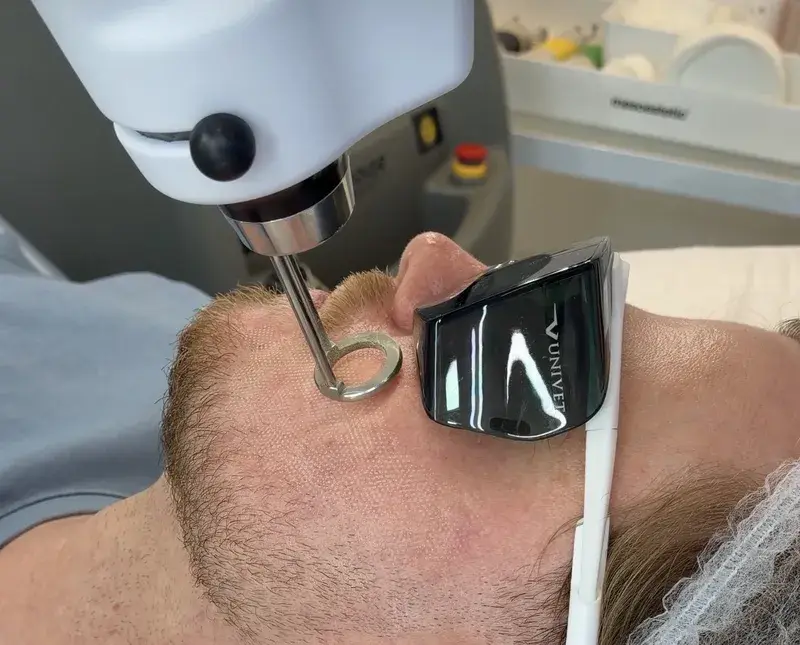
What works is controlled skin resurfacing: microscopic columns of deliberate micro-injury are made in the skin, and the skin fills them with new collagen. Session by session the scars get shallower and the texture more even.
At Taletsky we work with the Quanta System Er:YAG, a medical device from Italy made exactly for this. Sometimes we combine it with other devices. The exact combination is matched personally to you.
How many sessions and when you see a result
This is the most important question, so here is an honest answer:
| What | What to expect |
|---|---|
| Number of sessions | Usually 3 to 4, sometimes 5 for deep scars |
| Interval | About two months |
| Visible change | After 3 to 4 sessions |
| Redness after a session | 3 to 10 days, depending on depth |
| Back to work | Usually the next day |
Collagen builds slowly. That is why the result keeps improving for months after the last session. Anyone who promises you new skin after one session is not telling you the whole truth.
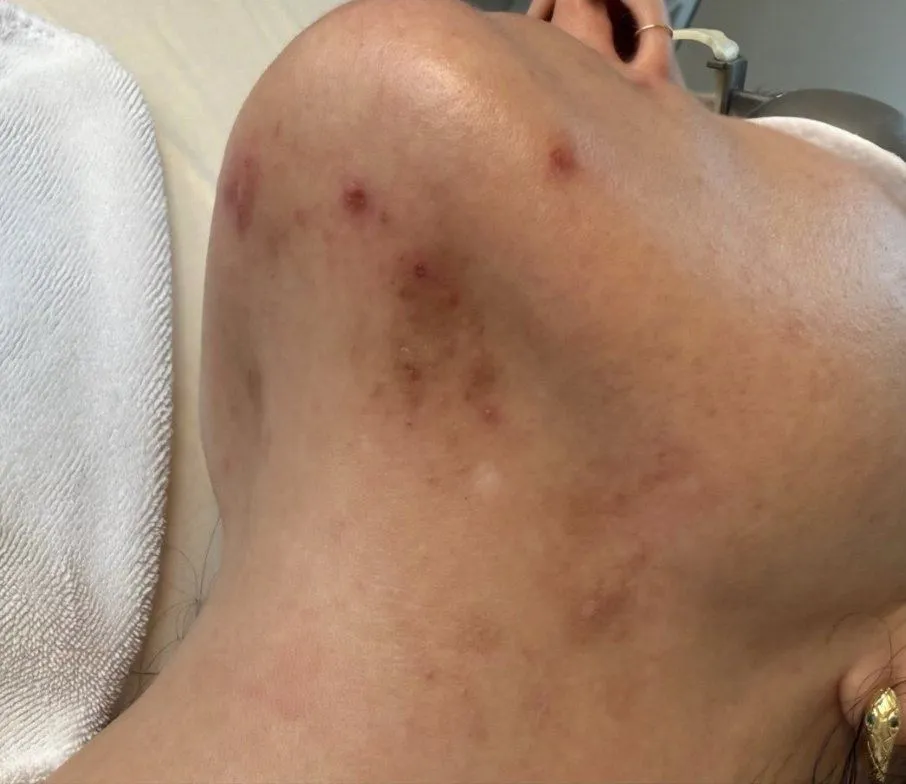
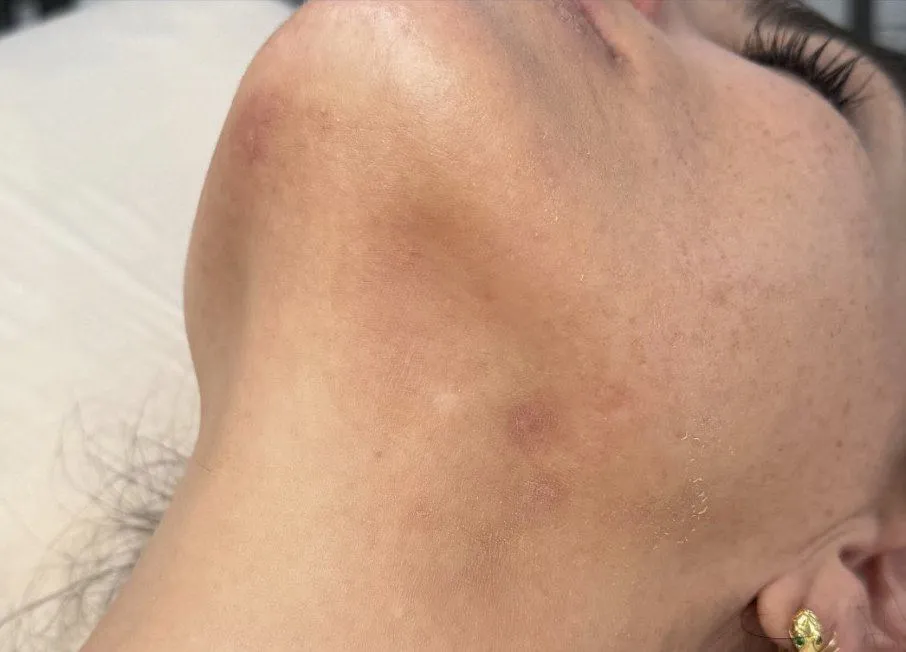
What the treatment actually looks like
Diagnosis. First we look at the skin in good light, identify the scar type and skin tone, and decide whether now is the right time at all. If there is active acne, we start there.
The session. A numbing cream is applied and Zimmer Cryo 7 cold air cools the skin throughout. You feel a short, warm prickling. The session itself takes from half an hour to 45 minutes, depending on the area. In most cases no longer than half an hour.
After. Redness and tiny dots for a few days, depending on depth. At home: a soothing cream, SPF 50 and no picking at the crusts. You get clear instructions and follow-up until the skin heals.
About acne scar treatment →What we won’t promise you
- We won’t promise perfectly smooth skin for deep rolling scars. They can be improved a lot, not erased.
- We won’t start scar treatment while there is active, inflamed acne. The skin is calmed first.
- We won’t treat every skin tone the same way. Darker skin gets more careful settings.
If the treatment isn’t right for you, we’ll tell you at the consultation. That is why people come back to us.
Active acne and skin renewal →Frequently asked questions
Does acne scar treatment hurt?
Most people describe a short, warm prickling. With numbing cream and cold-air cooling the session is very tolerable.
How long is the face red afterwards?
3 to 10 days, depending on depth. In most cases you can go back to work the next day.
Can acne scars be treated in summer?
Yes, with strict sun protection and no direct sun. Deeper sessions are sometimes better planned for winter.
I still have breakouts. Can I start?
Active acne is treated first and the skin is calmed. Scar treatment starts once the inflammation has settled.
How much does acne scar treatment cost?
The price depends on the area and depth of the scars and is set after a diagnosis.* The price list includes packages of 3 and 5 sessions.
When will I see a result?
A clear change is usually visible after 3 to 4 sessions, and improvement continues for months after the last one.
Want to know what can be done with your scars?
A personal diagnosis: we check your skin, explain exactly what can be achieved and build your plan.
Book a consultation on WhatsAppPrices* The final price is set after a personal skin diagnosis at the clinic.